.png)
The Importance of Regular Facade Cleaning for High-Rise Buildings

On a high-rise building, the facade is far more than an outer shell. It is the surface that takes the daily impact of rain, humidity, traffic residue, dust, algae, and airborne pollutants, all while shaping how the property is perceived from street level and from within. When cleaning is delayed, visible dirt is only part of the problem. Staining can become harder to remove, minor defects can be hidden from view, and the building can begin to look older than it is. For owners and managers, regular facade cleaning is therefore not a cosmetic extra but a practical part of long-term high-rise care in Malaysia.
Why facade cleaning matters beyond appearance
A clean facade immediately improves the way a commercial tower, residential development, or mixed-use property is received. That matters because the building exterior sets expectations before anyone steps inside. Yet appearance is only the most obvious benefit. Dirt, mineral deposits, bird droppings, and biological growth can sit on glass, metal, stone, painted surfaces, and sealant lines for extended periods, gradually affecting how those materials perform and age.
Malaysia’s climate makes routine care especially important. Heat, frequent rain, and urban pollution can leave facades looking dull faster than many property owners expect. Areas around joints, ledges, window frames, and shaded elevations often collect grime unevenly, creating patchy staining that becomes more difficult to address if left too long. Regular cleaning helps break that cycle before the facade starts to show persistent wear.
When cleaning is delayed | When cleaning is routine |
Stains become more embedded and harder to remove | Surface contaminants are cleared before they settle deeply |
Minor facade defects may be hidden by dirt buildup | Cracks, failed sealants, and drainage issues are easier to spot |
The building can appear neglected or unevenly maintained | The exterior presents a consistent, well-managed image |
Maintenance often becomes reactive and more disruptive | Cleaning supports planned, orderly maintenance cycles |
How regular cleaning protects building performance
Facade cleaning supports the condition of the building envelope by removing contaminants that can sit against exterior materials for long periods. While cleaning itself is not a repair, it creates the conditions for better protection and earlier intervention. Once surfaces are clear, maintenance teams can more easily identify issues such as deteriorating sealant, failed waterproofing details, corroded elements, loose fittings, or blocked weep paths around glazing systems.
This is particularly relevant for buildings with extensive glass and aluminium systems. External window cleaning improves clarity and daylight, but it also allows closer observation of gaskets, joints, frames, and fixings that might otherwise be missed. In practical terms, a routine cleaning programme often supports better maintenance decisions because the facade can be inspected in its true condition rather than through a layer of grime.
Surface preservation: routine removal of residue reduces the risk of stubborn staining and premature weathering.
Inspection visibility: clean surfaces make defects easier to identify before they worsen.
Operational planning: scheduled work is usually easier to coordinate than urgent remedial access.
Occupant perception: a well-kept exterior reinforces confidence in building management.
Choosing cleaning services Malaysia for high-rise facades
High-rise facade cleaning should never be treated as standard ground-level cleaning performed at height. Access, weather, facade material, drainage points, surrounding traffic, and occupant safety all need careful planning. For property teams reviewing cleaning services Malaysia options, the key distinction is whether the contractor understands the technical demands of high-rise work rather than simply offering general cleaning.
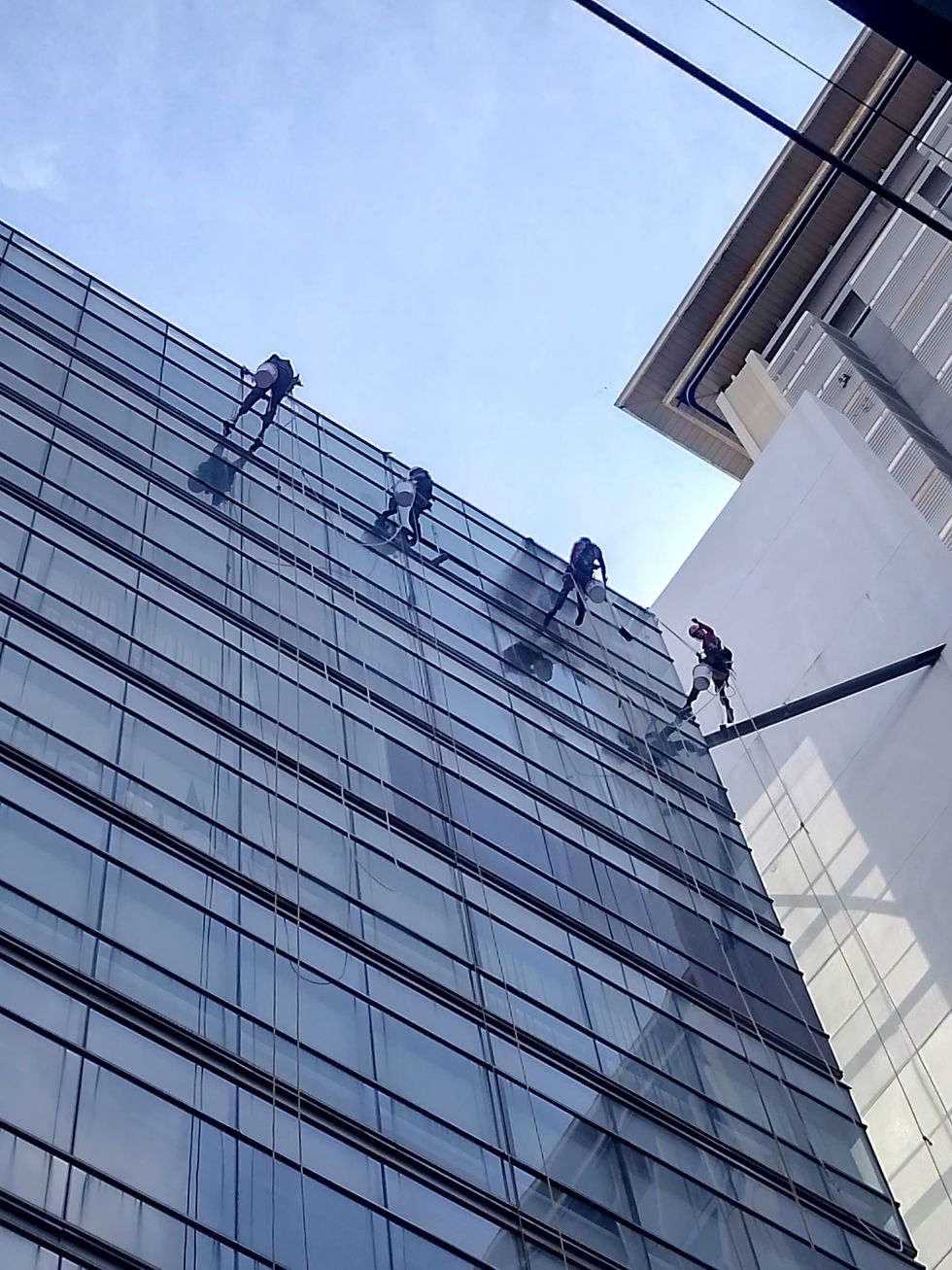
That is where specialist capability matters. Rope access methods, suspended platforms, and external window cleaning procedures each suit different building types and elevations. The correct approach depends on the facade design, the condition of the surfaces, and the scope of related tasks. In many cases, cleaning also connects with broader maintenance needs such as waterproofing reviews or targeted facade inspections.
Vertical Pro Sdn Bhd | Expert High-Rise Cleaning Services operates in this space, focusing on professional high-rise cleaning, facade cleaning, external window cleaning, waterproofing, and rope access services in Malaysia. For commercial buildings, that kind of combined capability is useful because it allows cleaning to be planned alongside other exterior maintenance priorities instead of treating each need in isolation.
Signs a building needs a fixed facade cleaning schedule
Many properties wait until the exterior looks obviously dirty before arranging access. By that point, cleaning is already overdue. A more effective approach is to watch for early indicators that the building would benefit from a structured schedule.
Glass panels begin to look hazy even after rain.
Streaking appears below ledges, joints, or drainage points.
Facade panels show uneven colour caused by residue or biological growth.
Past inspections have identified sealant or waterproofing concerns.
Tenant-facing elevations are starting to affect the building’s presentation.
Cleaning is repeatedly arranged on an urgent, ad hoc basis.
Once these signs appear, the question is usually no longer whether cleaning is necessary, but how frequently it should be scheduled and what access method is most suitable for the building.

What an effective facade maintenance plan should include
Regular facade cleaning works best when it is built into a wider building care plan. That plan does not need to be complicated, but it should be deliberate. A thoughtful schedule helps avoid both over-cleaning and neglect.
Assess the facade materials. Glass, painted surfaces, stone, aluminium, and composite panels may require different cleaning methods and chemicals.
Match the access method to the building. Rope access, gondolas, or other systems should be selected according to height, layout, and safety requirements.
Set a realistic frequency. Exposure level, location, and tenancy profile all influence how often the facade should be cleaned.
Coordinate with inspections. Cleaning visits are a practical time to check joints, sealants, waterproofing details, and visible defects.
Document findings. Noting recurring problem areas helps building managers plan repairs before issues spread.
When cleaning is tied to inspection and upkeep, the facade becomes easier to manage over time. Instead of responding only when appearance declines, the building team can make more informed decisions about repair timing, budgeting, and risk.
Conclusion
The importance of regular facade cleaning for high-rise buildings lies in its wider impact. It protects presentation, supports inspection, helps preserve materials, and encourages more disciplined maintenance across the building envelope. In a climate that quickly exposes exterior surfaces to moisture, dust, and pollution, waiting too long rarely saves time or money.
For owners and managers considering cleaning services Malaysia, the most sensible approach is consistent, specialist-led care that reflects the height, material, and maintenance needs of the property. A clean facade does more than look good. It helps a high-rise building perform, age, and represent itself the way it should.
Comments